


An indoor waterfall brings the look and sound of falling water inside, without any of the plumbing the real thing would need. Water runs down a flat panel of slate, glass, or mirror, gathers in a base at the bottom, and a hidden pump quietly carries it back to the top. You will see these sold as water walls, wall waterfalls, or indoor water features, but they are all the same idea. This guide covers how they work, the main types, where to put one, and how to choose the right size.
An indoor waterfall is a self-contained fountain built to run inside a home or office. The water moves in a closed loop, so it never needs a drain or a plumbed water line. You fill the base, plug it into a normal outlet, and the pump sends the same water up and over the face again and again.
The names can be confusing, so here is the plain version. A water wall is the flat, vertical kind that hangs on a wall or stands against one. A wall waterfall means the same thing. A floor waterfall stands on the ground like a piece of furniture. They are all indoor water features, and they all do the same job, which is to put moving water somewhere you can see it and hear it.
There is very little going on inside, which is part of the appeal. A small, quiet pump sits in the base and pushes water up to a channel that runs along the top. From there the water spreads out and slides down the face in a thin, even sheet, then collects in the base and starts the trip over. Most models have a light bar along the top that washes the surface in a soft glow, and that is what gives an indoor waterfall its evening look.
Because the water recirculates, the whole thing asks very little of you. Keep the base topped up, give it a nearby outlet, and it runs. If you want the full walk-through, we cover it in how wall fountains work.
These hang on the wall like a framed piece of art and use no floor space at all. They are the most popular choice for a living room, an entryway, or an office wall, and they come in sizes from a slim panel up to a wide, multi-panel piece that fills a whole wall. If someone says water wall or wall waterfall, this is usually what they mean.

A floor waterfall stands on the ground on its own base, so it works as a centerpiece or even a room divider. You can see it from more than one side, and it makes a taller, more dramatic statement than a wall piece. This is the one to pick when you want the waterfall itself to be the focal point of the room.

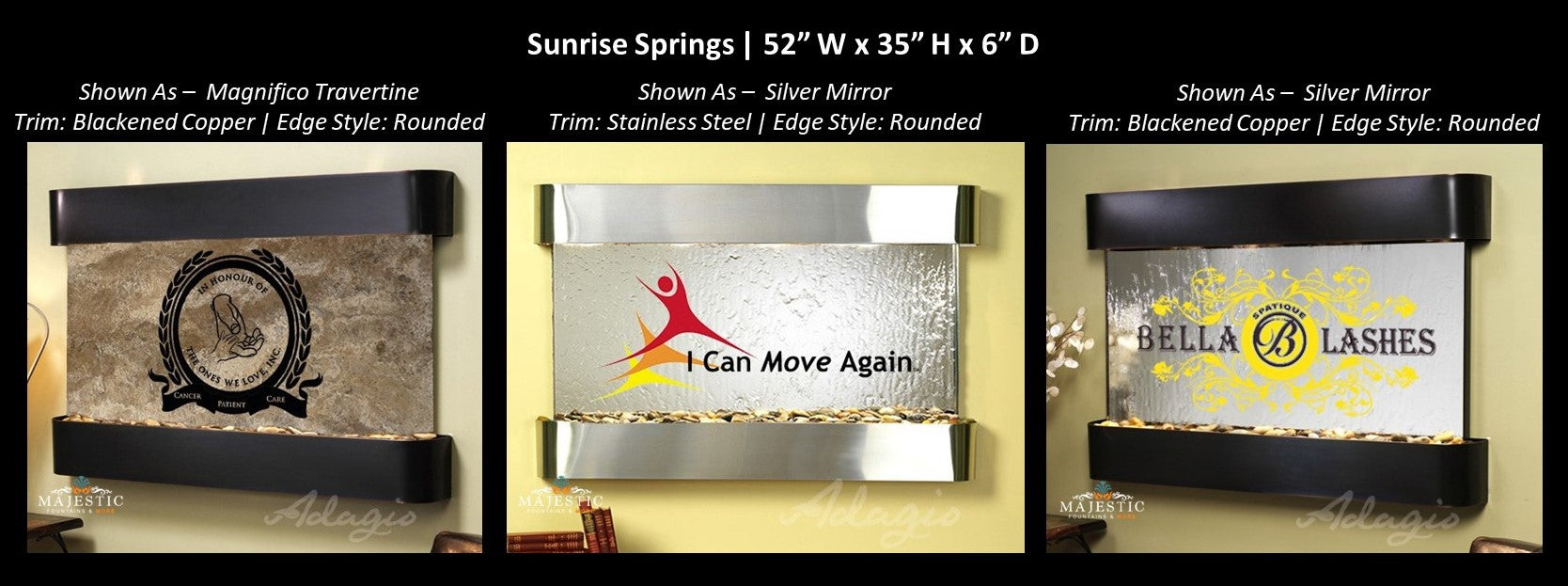
If you have searched for a mirror waterfall, this is the type you were picturing. Instead of stone, the water runs down a face of clear glass or silver mirror. The reflective surface bounces light around the room and gives the water a clean, modern look, which is why these are the go-to for contemporary spaces, offices, and lobbies. They also take an etched logo beautifully.
 Adagio Tranquil River - Blue Glass Water Wall
 Adagio Mega Grandeur River - Clear Glass Water Wall
 Adagio Whispering Creek - Silver Mirror Wall Fountain
 Adagio Teton Falls - Silver Mirror Wall Fountain
The smallest of the family, a tabletop waterfall sits on a desk, a console, or a shelf and simply plugs in. It is the easiest way to add the sound of moving water to a room without committing to a large piece, and it is a popular first fountain.
 Campania Mini Element With Birds - Cast Stone Tabletop FT-252
 Campania M-Series Platia - Cast Stone Tabletop FT-161
 Campania Genesis II - Cast Stone Tabletop FT-73
The surface the water runs over sets the whole mood of the piece.
There is more on each material, including how it changes the sound and the upkeep, in our guide to fountain materials.
Water walls are a favorite in offices, lobbies, restaurants, and spas, and not only for the calm they bring. Because glass and mirror take an etched or applied logo cleanly, a water wall can turn into a piece of branded, moving signage behind a reception desk. If that is what you are after, take a look at our logo and engraving options.

Our buyer's guide and our wall fountain sizing guide both go deeper if you are stuck between two.
An indoor waterfall is quieter than most people expect. The water sheets down a flat face rather than splashing, so it settles into a soft, even sound close to gentle rain, and many models let you turn the flow down further. There is more in our guide to how loud a fountain really is.
Upkeep is light. Use distilled water to keep the surface clear, top up the base now and then, wipe it down every week or so, and give the pump a deeper clean every month or two. Our care guide has the routine.
It is a self-contained fountain made to run inside, where water flows down a flat panel of slate, glass, or mirror and a hidden pump recirculates it. It needs no plumbing and plugs into a standard outlet. Water walls, wall waterfalls, and floor waterfalls are all versions of the same thing.
Nothing, really. They are two names for the same product: a flat, vertical fountain where water sheets down the face. Some people say water wall or wall waterfall, others say wall fountain.
A small pump in the base sends water to the top, where it spreads out and slides down the face in a thin sheet, then collects in the base and cycles again. The same water is reused, so you only top it up now and then.
An indoor waterfall with a silver-mirror face instead of stone. The water runs down the reflective surface, which bounces light around the room and gives a clean, modern look. It is a popular choice for contemporary rooms and offices.
No. The water sheets down a flat face rather than splashing, so it makes a soft, even sound close to gentle rain, and most models let you lower the flow for an even quieter setting.
Not at all. Use distilled water, keep the base topped up, wipe the face weekly, and deep clean the pump every month or two. That is the whole routine.
Yes. Glass and mirror faces take an etched or applied logo cleanly, which is why water walls are popular in office lobbies and reception areas as branded features.


